




News

Surgeons Use Teleoperated Humanoid Robots to Perform Live Surgery – a World First
July 8, 2026
For the first time, two teleoperated humanoid robots have been used to complete two surgeries during a preclinical trial, researchers report in the July 8 issue of the journal Nature. The work is the result of a collaboration between a team of engineers and a team of surgeons at the University of California San Diego. Full Story

UC San Diego Researchers Receive ARPA-H Award to Make Birth Safer
June 23, 2026
Researchers in obstetrics and engineering at UC San Diego were awarded up to $10.4 million from ARPA-H to enable more accurate identification of fetuses who are at risk of low oxygen during labor, as part of a larger effort to make birth safer in the U.S. Full Story

A Small Optical Component Could Change How Telescopes View the Sun
June 10, 2026
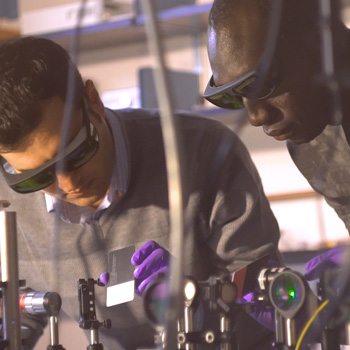
A new telescope technology — measuring just six millimeters in diameter — could improve how future space missions study and monitor the Sun while simplifying onboard hardware and reducing costs. The technology is built from a metasurface, which is a device engineered with nanoscale structures that manipulate light in unusual ways. In tests at the Dunn Solar Telescope in New Mexico, the metasurface captured scientifically meaningful data of the Sun's magnetic fields and sunspots. Full Story
.png)
Outstanding engineering, computer science undergraduates honored with Awards of Excellence
June 9, 2026
These six students were selected from the more than 1,300 graduating undergraduates in the Jacobs School of Engineering class of 2026 to receive Awards of Excellence from their academic department. Full Story